

Board and batten siding gets asked about more than anything else on the exterior side of our business right now. It is the vertical look, wide boards running up the wall with a narrow strip covering every seam. People see it on a farmhouse front or a colonial gable and they want to know two things before they commit: what it runs, and how long before they are doing this again.
I cannot give you a square foot number over the phone that means anything, because the price on a board and batten job is mostly set by the house it is going on. What I can do is walk you through what moves that number and how long each material actually lasts out here.
The quick version: the material you pick sets the lifespan, and the house you own sets the price. Vinyl is the cheapest and lasts 20 to 30 years. Engineered wood sits in the middle and needs repainting. Fiber cement costs the most up front and lasts the longest. What is underneath the old siding is the one thing nobody can price until it comes off.
What Board and Batten Siding Actually Is

Board and batten is a profile, not a material. Wide boards go on the wall vertically, and a narrow batten covers each joint between them. It started on barns, where the boards were rough sawn and the battens kept the weather out of the gaps. The look carried over to houses and it has stayed popular because the vertical lines make a wall look taller.
Batten spacing is a real decision and it changes both the look and the material count. Twelve inches between battens reads tight and traditional. Sixteen or twenty inches reads wider and more modern. Tighter spacing means more battens, more fasteners, and more labor, so it shows up on the estimate.
There are also panel systems that come with the batten profile already formed into a sheet. They go up faster and cost less to install, and up close they do not look the same as real board and batten. If you are still comparing profiles, our types of siding runs through the rest of them side by side.
The Materials You Will Be Choosing Between

Four materials cover almost every board and batten job we quote. Here is how they compare on the things that actually matter after the crew leaves.
| Material | Typical service life out here | Upkeep | Where it sits on price |
|---|---|---|---|
| Vinyl | 20 to 30 years | Rinse it once a year, nothing to repaint | Lowest |
| Engineered wood | 20 to 30 years | Repaint roughly every 8 to 12 years, keep cut ends sealed | Middle |
| Fiber cement | 30 to 50 years | Repaint roughly every 10 to 15 years unless it comes factory finished | Highest |
| Cedar | 20 to 40 years, and only with real upkeep | Stain or paint every 4 to 7 years | High, and the upkeep cost keeps going |
Vinyl is the value pick and it has gotten better. The board and batten profiles now come in deeper colors that hold up, and there is nothing to repaint. It can crack if something hits it in the cold and it can come loose in high wind if it was not nailed correctly. Engineered wood is lighter than fiber cement, goes up faster, and takes paint well, but every cut end has to be sealed the day it is cut. Fiber cement is the longest lasting of the group and the heaviest to hang, which is part of why it costs more to install.
There is one more product worth naming. T1-11 is a plywood panel with grooves milled into it, and from the street it reads a lot like board and batten. It is a different material with different maintenance and a different price, and our t111 siding covers what it is good for and where it falls short.
What Drives the Price Up or Down

Two houses on the same street with the same square footage can come in thousands of dollars apart. This is what moves it:
- How many stories, because a second story means staging and staging means setup time before anyone hangs a board
- What is under the old siding, which nobody knows until it comes off
- The number of windows and doors, since every opening needs trim, flashing, and cuts on both sides
- The trim package, meaning corner boards, frieze boards, window casing, and how wide you want them
- Batten spacing, because 12 inch spacing uses noticeably more material and nailing than 16 inch
- Whether the old siding comes off or the new goes over it, which also affects what we can inspect underneath
- Gables, dormers, bump-outs, and anything else that adds corners and angle cuts
- The material itself, which is usually the smallest part of the spread between two quotes
That last point surprises people. The gap between two siding quotes is usually labor, prep, and trim, not the boards. We build every estimate down to the nail so you can see which line is doing the damage instead of guessing, and there are no fees that show up later.
How Long It Lasts Near the Water

The lifespans in that table assume an average house. Get close to the water and the numbers move, and the part that moves first is usually not the siding itself. It is the fasteners and the paint film.
Exposure is not the same across the island. A house a few blocks off the Great South Bay takes salt spray and wind-driven rain that a house five miles inland never sees. On our home remodeler west islip jobs we spec stainless fasteners rather than galvanized, and we seal every field cut end before it goes on the wall. Fasteners are the one part you cannot go back and fix later without pulling boards off, so they get decided up front.
Paint is the other one. South and west facing walls take the most sun and they will need repainting before the north side does. That is normal and it is worth planning for instead of being surprised by it. If you go with fiber cement or engineered wood near the water, a factory finish will outlast a field paint job by a good margin.
What Goes On Behind the Siding

Siding is a rain screen, not a seal. Water gets behind every siding job eventually, and what keeps a wall dry is the layer underneath and the flashing at the openings. When we strip a house we are looking at the sheathing, the window flashing, and anywhere a roof meets a wall.
House wrap goes on with the seams taped and lapped in the right direction so water runs out instead of in. Windows get flashed at the sill first, then the sides, then the head, in that order. Where a roof line runs into a wall you need a kick-out flashing at the bottom, and that one missing piece is behind a large share of the rot we find. With fiber cement or wood, furring strips behind the boards give the wall an air gap to dry out, which adds cost and adds years.
Rotten sheathing is the one thing no honest contractor can quote before demo. Ask how it will be handled if we find it, get the per-sheet number in writing before we start, and you will not have a conversation about it in the middle of the job.
On permits, the rules are not the same in every township out here. A straight siding replacement is treated differently than work that changes the structure. Have whoever is quoting the job confirm it with the building department before the trailer shows up rather than assuming either way.
Doing It While Other Work Is Already Happening
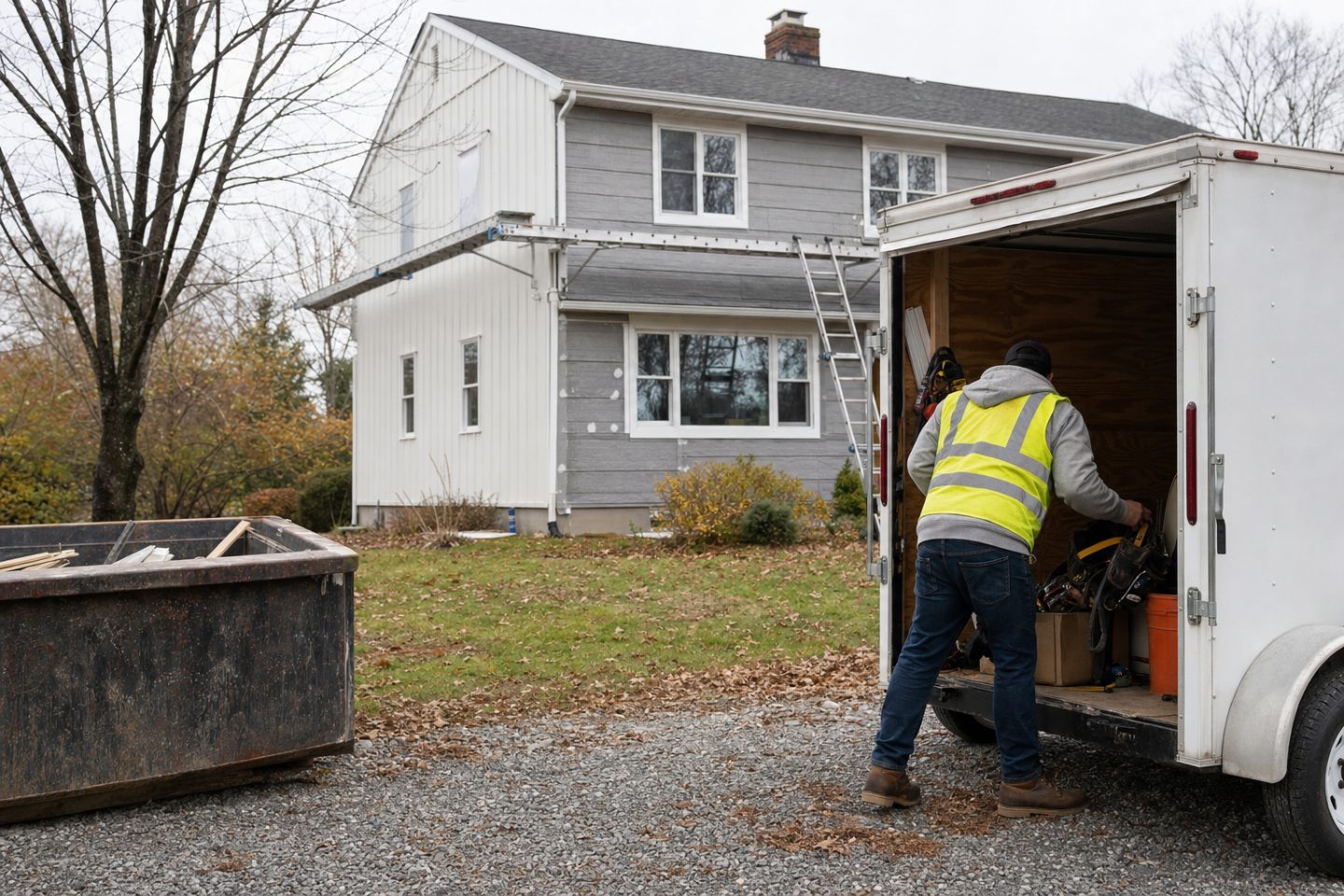
If other work is planned on the house, the order matters. Windows are the big one. Window flashing ties into the siding, so replacing windows after the siding is on means opening the same wall twice and paying for the same detail twice. Do the windows first or do them in the same trip.
Roofing is similar. If the roof is coming off within a couple of years, the drip edge, the rake trim, and any kick-out flashing all get touched twice unless the two jobs are coordinated. One mobilization, one dumpster, one set of staging is cheaper than two of each.
Interior work matters less for sequencing but it still matters for the calendar. We handle the inside of the house too, so a kitchen and a siding job can run off one schedule instead of two, and you get one portal with the daily logs for both. Our kitchen remodeler stony brook shows what the interior side of that looks like.
Get a Real Number for Your House
Board and batten is a good choice on most Long Island houses. Which material makes sense depends on how long you are staying, how close you are to the water, and how you feel about repainting. Those are three questions, and they take about ten minutes to answer at the kitchen table.
Send us the address and a couple of photos of the house through our contact form and we will come measure it. You will get an itemized estimate that shows the boards, the trim, the wrap, the flashing, and the labor as separate lines, with no fees added later, plus a portal with daily logs and a live schedule once the job starts.