

Dormer additions in Hauppauge, NY: shed vs gable vs full second-story, what Town of Hauppauge inspectors check, and how the existing roof framing decides which type fits.
Quick answer: dormer additions in Hauppauge, NY are decided by the existing roof framing, not by the homeowner’s wish list. A 1948 Cape almost always wants a shed dormer. A 1965 ranch wants a full second-story addition (which is a different beast).
A 1920s Colonial with a steep roof might only need a gable dormer for a single bedroom. Same house category, three different conversations. The framing tells you which one before any architect does.
1948 Cape. 1,260 square feet on the first floor, an unfinished half-story above with knee walls and 4-foot ceilings. Owners called me last March from the Hauppauge-Levittown corridor. They had a third kid coming and wanted a real second floor. Their builder neighbor had told them they needed a ‘full second story.’ My answer: you don’t.
You need a shed dormer. Two new bedrooms, a full bath, and the first-floor footprint stays exactly the same. Took 11 weeks. Here’s how to know which dormer your Cape is asking for, and what every Hauppauge-area homeowner should walk into the conversation already understanding.
What a dormer is, and what it isn’t
A dormer is a roof projection that creates usable headroom in an attic or half-story. Not all dormers are the same. The four common types each solve a different problem on a Long Island house. Knowing which one your house wants is the first decision, before you call a contractor and definitely before you call an architect.
On a 1948 Cape with a center chimney and a pitched roof, a shed dormer almost always wins. On a 1965 ranch where the attic was never finished as living space, you’re looking at a full second-story addition, which is a different beast entirely.
On a 1920s Colonial with a steep roof, a gable dormer might be enough to get you a single bedroom. Same house, three different conversations. The framing tells you which one.
The four dormer types Hauppauge Capes typically use
| Dormer type | Best for | Adds | Visibility from street |
|---|---|---|---|
| Gable dormer | Single attic bedroom, less obtrusive look | 60-110 sq ft of usable space | Subtle, blends with original roofline |
| Shed dormer (back) | Two bedrooms or bedroom + bath on a Cape | 250-400 sq ft of usable space | Hidden from the street side |
| Shed dormer (front) | Same as back, but visible from the street | Same square footage, more variance scrutiny | Visible, may need design review |
| Full dormer (whole second story) | Converting a Cape to a 2-story Colonial-style | 550-900 sq ft of usable space | Full architectural shift |
On most Hauppauge-area Capes, the shed dormer is the answer. It captures the most usable space, ties cleanly into the existing rear roof, and clears the variance review faster than a front dormer or a full second story.
The framing of a 1940s Cape was built with the dormer option in mind, even when the original owner never built one. The bones are there. The dormer is just finishing what the original builder started.
Sequence: why the order of decisions drives the project
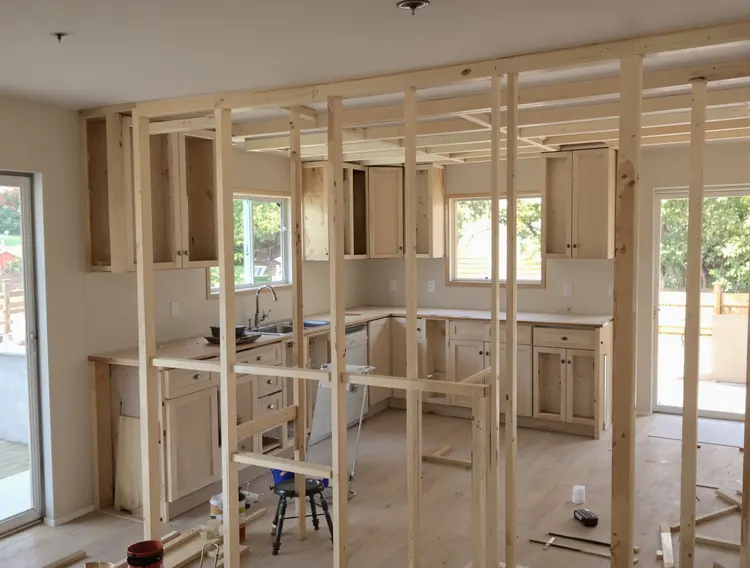
On dormer additions, sequence beats every other decision. Mechanicals first. Heating, plumbing rough, electrical service. Then envelope. Roof tie-in, the windows that have to come out, masonry pointing if the chimney needs it. Then framing inside the new dormer space.
Then plaster and finishes. Doing finishes first on a 1948 Cape is how a homeowner ends up paying for the same wall twice. Inspectors in Nassau County care about the order too. They ask, in this exact sequence, which layer you’re on.
The owners who called me from Levittown wanted to pick paint colors on the second visit. We didn’t have a finished framing plan yet. I told them: not yet. Pick the bedroom layout first. Pick the bathroom location second. Pick the closet doors third. Paint can wait until week 8. They got it on the first call. Smart clients.
Permits, variances, and what Hauppauge-area inspectors check
In the Town of Hauppauge, any dormer addition needs a permit. Period. Most shed dormers also trigger a setback review. Hauppauge requires a 25-foot rear setback in most zoning districts.
If your Cape is already close to the rear lot line, your shed dormer may push the building higher within the existing footprint, but you’ll still need a variance hearing if the new floor area exceeds the floor-area ratio cap. Plan 6 to 10 weeks for the variance process if you need one.
Inspectors in Hauppauge and the broader Nassau County area care about three things on dormer additions, in this exact order. First, the structural connection at the existing roof framing (because that’s where every dormer fails first).
Second, the egress window in any new bedroom (Suffolk and Nassau both follow IRC, 24 inches clear opening height, 5.7 sq ft net). Third, the smoke and CO detector layout, which is required to be brought up to current code in any house that’s adding a bedroom. Get those three right and inspections pass the first time.
When a dormer fits the house and when it doesn’t
A shed dormer fits a Cape with a steep rear roof, a center bearing wall, and a usable half-story already framed above the first floor. That describes most Hauppauge-area Capes built between 1942 and 1958.
The original builders framed the second floor potential into the bones of the house, even when the first owner never finished it. A dormer is the natural completion of that original design.
Where the fit fails: ranches that need a ‘pop the top’ addition. That’s not a dormer. That’s a full second story on a house that wasn’t designed to carry one. Foundation reinforcement, full structural reframe, two-story plumbing chase, the works.
The bones aren’t there. If a contractor walks into a 1962 ranch and starts talking about a dormer, ask if they mean an addition. The vocabulary matters because the engineering is different.
How the existing house tells you what fits
Three details in the existing house tell you what kind of dormer fits before any architect draws a line. First, the existing roof pitch. Anything steeper than 8/12 supports a shed dormer cleanly. Anything shallower wants a gable dormer or a full second story. Second, the location of the chimney.
Center-chimney Capes are easier because the dormer can be either side of the chimney without rerouting flue. Side-chimney Capes are tighter and may need the chimney relocated. Third, the rear yard depth. If the back of the house already crowds the setback, your dormer options are constrained before you even open a sketch pad.
Working with Long Island dormer contractors who’ve already done the variance work in your neighborhood saves 4 to 8 weeks on the front end.
That’s the part of the project most homeowners undervalue. The contractor who has stood in front of the Hauppauge zoning board with a similar house already knows what the board is going to ask. The contractor who hasn’t is going to learn on your job.
Why a dormer beats moving for most Hauppauge families
The Levittown family with the third kid coming had run the numbers on selling and trading up to a 4-bedroom Colonial in the same school district. The dormer kept their existing footprint, the existing yard, the existing schools, and the existing neighbors.
They stayed. That’s the calculation most Hauppauge-area Cape owners aren’t running early enough. A dormer on the right house gets the family the bedrooms it needs without changing anything else about the life around it.
That’s what dormer work does well. The right home renovation services across Long Island understand the calculation, because we run it for every Cape owner who walks in saying ‘I think we need to move.’ On old houses, the original builders weren’t fools. The framing, the door reveals, the way the trim returns into the jambs.
None of that was decorative. It was craft. Most of the time, the house tells you whether a dormer fits before any architect does. Listen first.
If you’re in Hauppauge, Levittown, Franklin Square, or anywhere across Nassau County with a Cape that feels too small, send pictures of the attic and the back roofline. We’ll tell you what’s possible before you start paying for architectural plans.