

Homeowner called me about a siding quote she’d gotten. $29,000 for a 2,000 square foot colonial in Hauppauge. Her neighbor had gotten vinyl done last year for $13,500. Same house size. She wanted to know why her quote was double. The answer wasn’t that her contractor was padding the number. It was that she’d been quoted fiber cement, and her neighbor had gotten vinyl, and nobody had explained that those are completely different products with completely different price tags and completely different lifespans.
Quick answer: Vinyl siding replacement on a 2,000 sq ft house in Hauppauge runs $10,000 to $16,000 installed. Fiber cement runs $18,000 to $32,000 installed. Fiber cement lasts 30 to 50 years, looks more like wood, and holds paint better. Vinyl lasts 20 to 30 years, costs less, and needs zero painting. Neither is the wrong answer. It depends on your budget, your timeline, and whether you plan to sell.
Vinyl vs. Fiber Cement: The Real Comparison
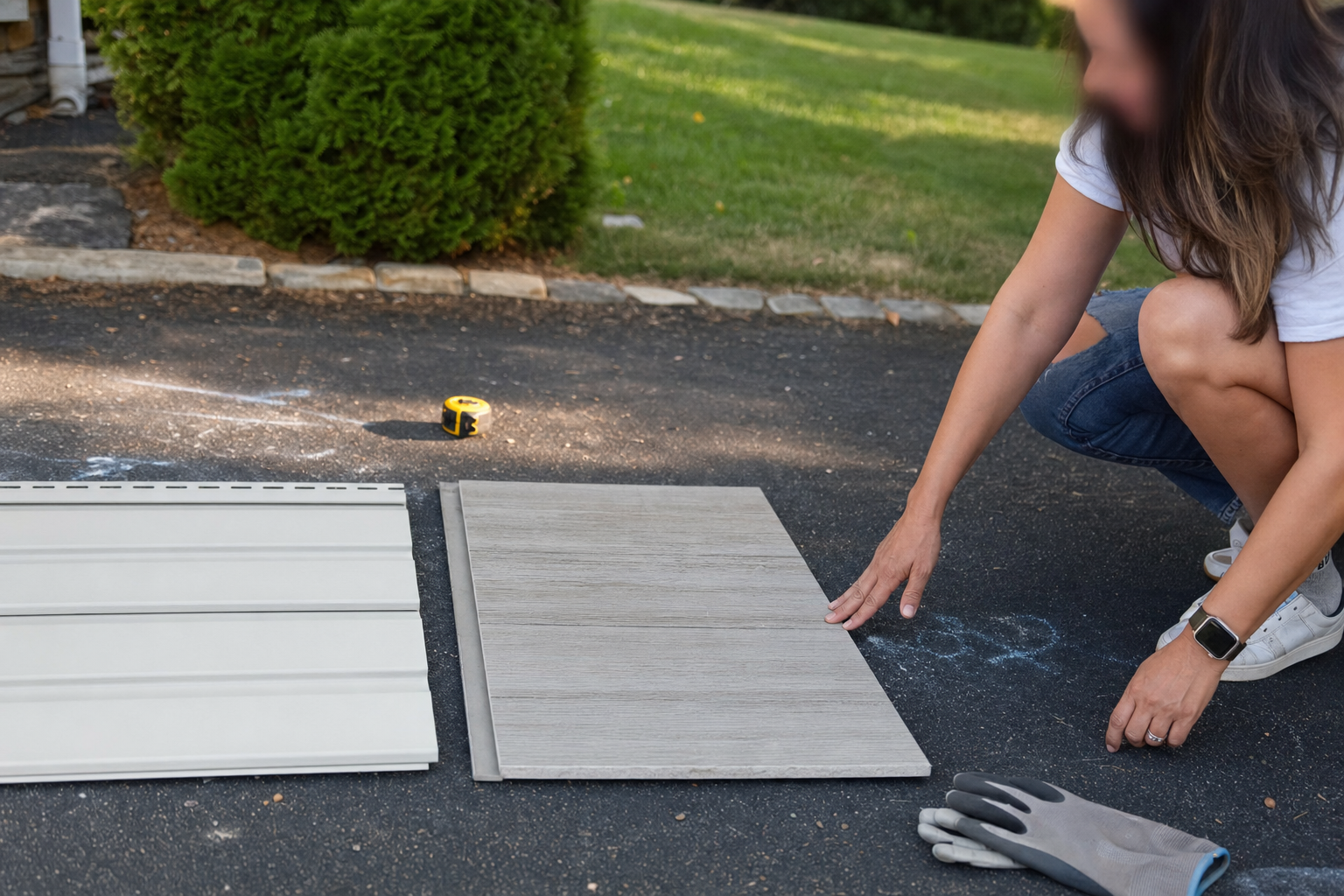
These two products aren’t competing in the same category. Vinyl is a plastic product. It’s lightweight, installs fast, and requires no maintenance past occasional washing. Fiber cement is made from sand, cement, and cellulose fiber. It’s heavier, takes longer to install, and needs to be painted every 7 to 12 years. But it looks like wood. And it holds up to impact in a way vinyl never does.
| Feature | Vinyl Siding | Fiber Cement |
|---|---|---|
| Installed cost (2,000 sq ft house) | $10,000 to $16,000 | $18,000 to $32,000 |
| Lifespan | 20 to 30 years | 30 to 50 years |
| Painting required | No | Yes, every 7 to 12 years |
| Impact resistance | Cracks in cold weather | Dents but doesn’t crack |
| Fire rating | Melts and burns | Non-combustible |
| Curb appeal resale value | Moderate | High |
| Installation time (2,000 sq ft) | 4 to 7 days | 7 to 14 days |
| Labor difficulty | Lower | Higher (heavy panels, saw work) |
One thing homeowners miss: fiber cement requires painting after installation, and then again every 7 to 12 years. That’s $2,500 to $6,000 per paint cycle on a 2,000 sq ft house in Suffolk County. Factor that into your 20-year cost calculation before making the decision based on sticker price alone.
What Drives Up the Cost of a Siding Job in Hauppauge
There are five things on a siding quote that separate the accurate number from the low number that gets expensive mid-project.
- Removing the old siding: tear-off and disposal runs $1,200 to $2,800 depending on layers. Some quotes bury this; some leave it off entirely.
- House wrap: a good installation includes new house wrap under the siding. Skipping it saves $800 and costs you in air infiltration for the next 20 years.
- Trim work: window wraps, corner boards, frieze boards, and J-channel add up to 15 to 25% of the total material cost. Low quotes often underprice this.
- Soffit and fascia: if your fascia boards are rotted (common on 30-plus-year-old Suffolk County houses), replacing them adds $1,500 to $4,500.
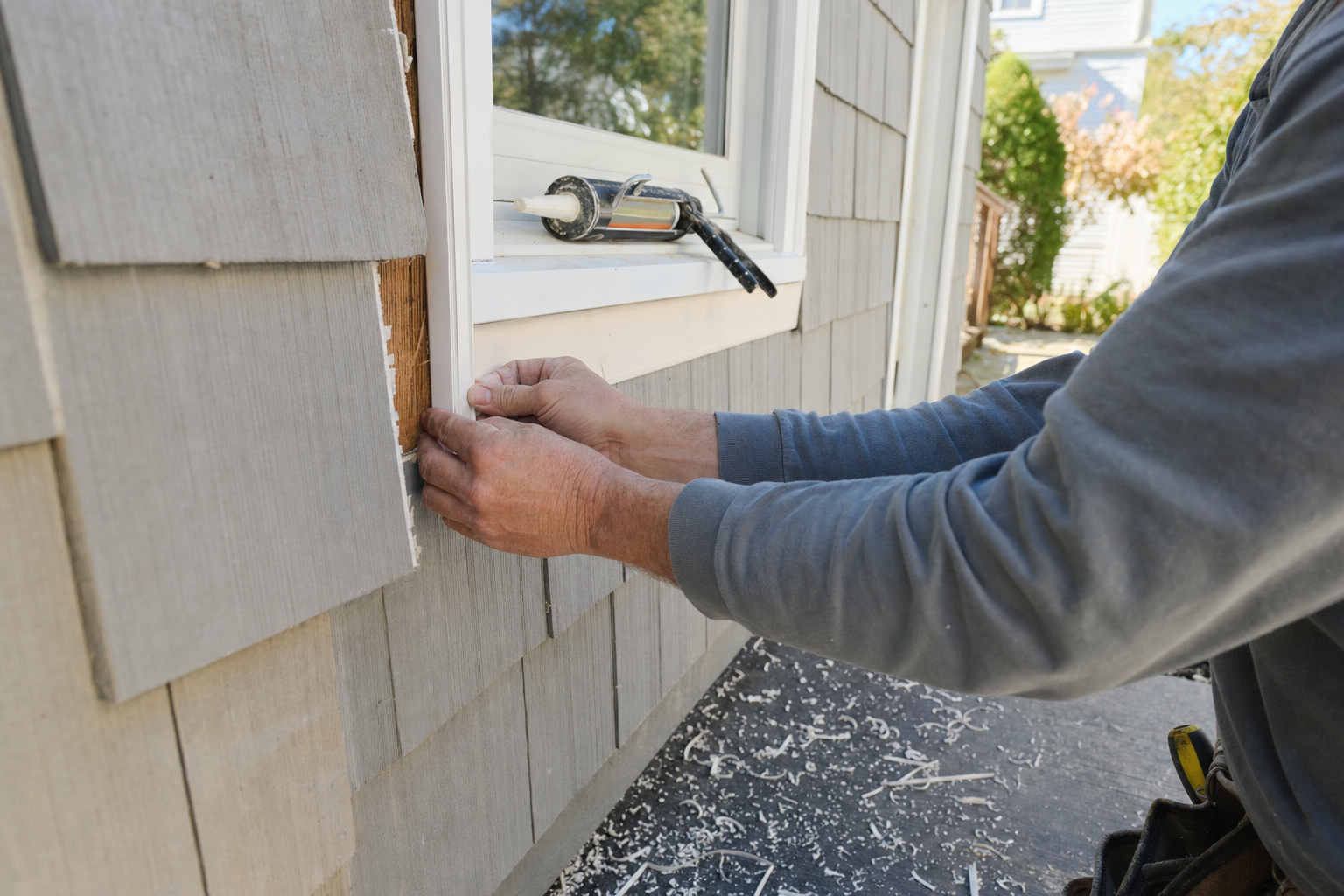
- Wood sheathing repair: if there’s any rot in the wall sheathing behind the old siding, it needs to come out before the new product goes up. Get a per-sheet price for this upfront.
The homeowner with the $29,000 fiber cement quote wasn’t being overcharged. But when I had her compare it line by line to the $13,500 vinyl quote her neighbor got, the vinyl quote was missing the house wrap, had no allowance for soffit repair, and the trim costs were 40% lower than realistic. The real apples-to-apples comparison was $16,000 vinyl versus $29,000 fiber cement. Still different, but at least it was honest.
What Actually Holds Up in Suffolk County Weather
Hauppauge gets cold winters, humid summers, and occasional severe storms. The inland location spares it from the direct salt air that Babylon and coastal towns deal with, but the freeze-thaw cycle in January and February is hard on vinyl. Cheaper vinyl (under $1.50 per sq ft material) gets brittle below 20 degrees and can crack if you so much as lean a ladder against it in February.
If you’re going vinyl, spend the extra $0.50 to $0.80 per square foot for a premium grade product with a thickness of 0.046 inches or above. Discount vinyl at 0.040 inches is the stuff that cracks, fades unevenly, and looks cheap in eight years. The product upgrade on a 2,000 sq ft house runs you an extra $1,000 to $1,600. Worth it. That’s the upsell that is worth it.
Fiber cement doesn’t have the cold-weather cracking problem. It’s heavier and more rigid. The failure mode for fiber cement in Suffolk County is paint adhesion, if the painting contractor doesn’t back-prime the boards before installation, you’ll get delaminating paint in five years. Ask specifically whether the installer back-primes. Some do, some don’t.
Timeline and Disruption to Expect
A vinyl job on a 2,000 sq ft colonial takes four to seven working days from tear-off to cleanup. Fiber cement takes seven to fourteen, sometimes more if there’s custom trim work. Neither job requires you to move out. The crew works on one elevation at a time, so you always have a usable exterior and your windows stay accessible.
What does disrupt things: the noise (nail guns and saws run all day), access around the perimeter of the house (move vehicles and planters before day one), and dust and debris in the yard. Budget about $300 to $600 for a dumpster if your contractor doesn’t include disposal.
The Quote Items to Check Before You Sign
Before you sign a siding contract, count the scope items that are actually priced. A complete siding contract should list tear-off and disposal, house wrap, main siding material with thickness spec, all trim items by category, soffit and fascia work (even if quoted as TBD pending inspection), and a change-order rate for sheathing repairs. Missing any of those? Ask for a revision.
And get two quotes minimum, but make sure both are on identical scope. Comparing a vinyl-only quote to a fiber cement quote with full trim work isn’t a comparison. It’s an accounting trick.
Getting a Siding Quote in Hauppauge
If you want to see what a complete, itemized siding estimate looks like from a licensed Suffolk County contractor, start with the fiber cement siding installation guide on Selective Remodeling’s site, which covers material specs and installation details. For a broader picture of their siding work across Long Island, you can see completed projects across Nassau and Suffolk counties. And if you’re also thinking about roofing, windows, or other exterior work at the same time, ask how they coordinate multi-trade remodeling projects in the Hauppauge area so the schedules line up. Material choice also plays out differently near the coast, where salt air and steady wind push the decision in a different direction than it goes inland.
The right siding product depends on your budget, your resale timeline, and how much maintenance you’re willing to take on. Neither vinyl nor fiber cement is the wrong answer if you go in with accurate numbers and a complete scope.