
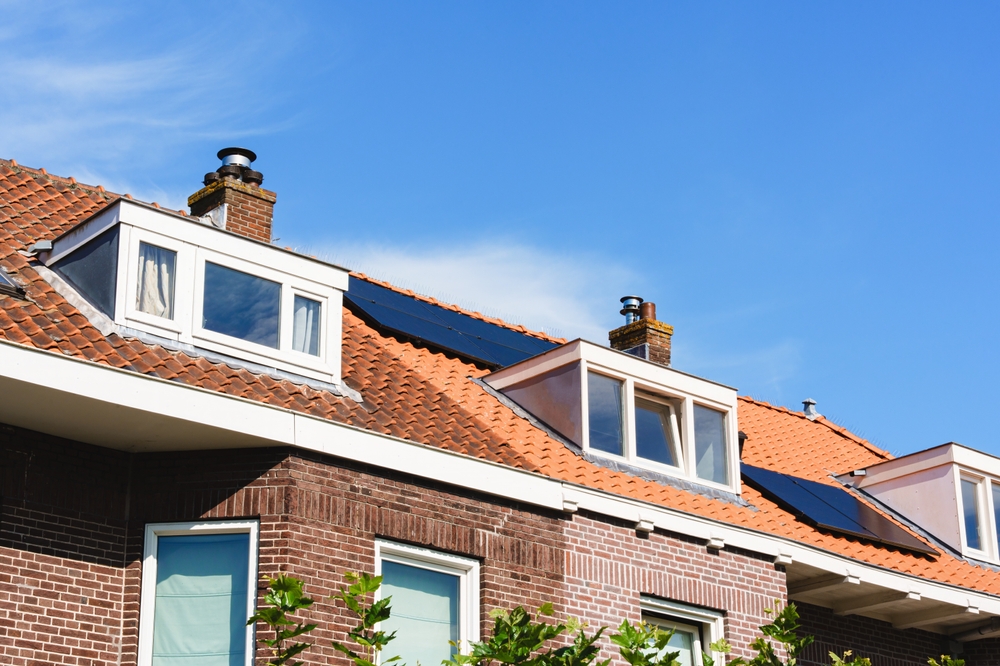
Dormers are very strong architectural elements and address two major issues: space problems and light problems. A dormer is projected vertically under a sloping roof, turning a narrow attic into a useful living space and greatly improving the exterior appearance of a house.
Whether you need to add to your master suite or simply enhance the appearance, it is important to learn the various types of dormers and how they can be installed.
What Is a Dormer?
A dormer is a roofed building, usually with a window, which sticks up vertically beyond the plane of a pitched roof. It is actually a structural bump-out that forms a windowed extension in a roofline.
Though commonly called the dormer windows, the dormer is the unit of the structure composed of the walls, the roof, and the window.
What Are Dormers on a House Used For?
Dormers can be used both as a functional and aesthetic feature.
Functional Benefits:
- Greater Headroom: They increase the height of the ceiling in certain space making cramped lofts or attics walkable.
- Usable Square Footage: They make corners that are ideal to use as reading nooks, desk space, or bathroom vanities.
- Natural Light and Ventilation: They bring natural light and air to higher stories, which would otherwise be dark.
Aesthetic Benefits:
- Curb Appeal: They subdivide the large and monotonous rooflines.
- Visual Balance: They are able to provide height and symmetry to the exterior profile of a home.
Dormer vs Gable: What’s the Difference?
Dormers and gables are often confused, but they are not the same.
| Feature | Dormer | Gable |
| Projection | Extends out from the roof | Flat wall section |
| Window | Yes | Sometimes |
| Adds interior space | Yes | No |
| Roof feature | Has its own roof | Is part of the main roof |
You can have dormers on a house with a gable roof, but a gable itself does not add interior space.
Types of Dormers on a House
The style of the dormer is very important in ensuring the architectural integrity of your home. The following are the most popular types of dormers.
-
Gable Dormer
A plain construction with a peaked roof and is sloping down both sides.
- Best for: Cape Cod, Colonial, and Georgian style homes.
- Advantage: sheds water quickly and provides a vertical interest and symmetry to a roof.
-
Shed Dormer
Has a flat roof that is sloping in the same direction as the main roof, but at a lower angle.
- Best for: Craftsman bungalows, farmhouse style.
- Advantage: Has the largest interior headroom and usable floor space of all kinds.
-
Steep Roof Shed Dormer
A shed dormer is sunk deep into the main roof line and almost in the pitch.
- Best for: Homes that have very sharp roofs.
- Advantage: The ability to have windows in high attics without interfering with the main roof structure.
-
Extended Shed Dormer
A big shed dormer which extends almost the whole width of the house.
- Best for: Second-story remodeling and utilizing the most square footage.
- Advantage: Makes an upper floor, which is typically a cramped attic, a full room.
-
Flat Roof Dormer
A variant of the shed dormer that has a horizontal roof (normally with a very minimal inclination to drain the water).
- Best for: Contemporary or modern houses.
- Advantage: Gives it a minimalistic appearance and allows maximum window height.
-
Hipped Dormer
Has a three-planned sloping roof that converges at the central point.
- Best for: Shingle-style, Prairie, and French-style homes.
- Advantage: Provides a more comfortable and smoother appearance, which merges with the main roof perfectly on every angle.
-
Arched Top Dormer
A dormer with an arched and curved roof on the window.
- Best for: French Eclectic and English Cottage architecture.
- Advantage: Makes the exterior look very elegant and soft in terms of architecture.
-
Eyebrow Dormer
An under-curved, low dormer, which may seem to be a sleepy eye or a wave in the shingles.
- Best for: Shingle style and Richardsonian Romanesque homes.
- Advantage: Decorative in nature, first, and also provides light to the attic, as well as provides a flowing organic roofline.
-
Mansard Dormer
These are mounted on the steep lower slope of the roof that has Mansard roofs.
- Best for: Second Empire and French Manor.
- Advantage: It maximizes the interior volume of the top floor so that it can be used as a complete story.
-
Through-the-Cornice Dormer
A dormer that is built through the edge of the roof (cornice) and is built as an extension of the vertical wall below.
- Best for: Grand manors and historical renovation.
- Advantage: Produces spectacular vertical lines and results in a smooth flow between the first and the second story.
-
Nantucket Dormer
It has a compound structure with two gable dormers with a shed dormer between them.
- Best for: Coastal and Cape Cod homes.
- Advantage: The advantage of having both the beauty of gable dormers and the larger area of a shed dormer.
-
Recessed Dormer
This style is also referred to as an inset dormer, and it is built into the roof instead of coming out.
- Best for: It is best used in harsh weather climates to protect windows.
- Advantage: Provides a more visual depth and window well at a cost of no alteration in the silhouette of the roof.
-
Reverse Dormer
A part of the roof that has been inverted, or cut, to make an inset balcony or patio.
- Best for: Urban homes or those that have less space in the yard.
- Advantage: Offers outdoor privacy on an upper-level.
-
False (Faux) Dormer
The roof has a decorative construction on the exterior, which resembles a dormer but does not lead to the interior.
- Best for: To enhance the curb appeal,l but without spending a lot of money.
- Advantage: Provides architectural appeal and stability at no cost of structural framework or waterproofing.
-
Prefabricated Dormer
A dormer unit that is manufactured off-site in a factory and transported on the roof by a crane.
- Best for: Quick renovations.
- Advantage: It saves a lot of time and exposure to the weather on-site.
Important Design Factors of Dormers on a House
The construction of a dormer is a complicated renovation. Consider these things to make sure that the outcome will add value instead of taking away from the home’s appearance.
- Style and Pitch of the Roof: The roof pitch determines what can be done. An example is that a gable dormer would hardly appear right on a hipped roof.
- Proportions and Scale: One of the most frequent mistakes is to construct too large dormers. They must not be the principal roof, but secondary.
- Material Choice: Do not use materials (shingles, siding, and window frames) that do not match or are deliberately dissimilar to the existing house, so that it appears to be tacked on.
- Weatherproofing and Insulation: Since they are in the form of projects on the roof, the dormers are exposed to the wind and rain on three sides. Flashing and good-quality insulation are something that cannot be compromised because of the possibility of leaks and energy waste.
Advantages and Disadvantages of Dormers on a house
Advantages of Dormers
- More Natural Light: Turns gloomy attics into sunny and welcoming rooms.
- Enhanced air circulation: Openable windows enhance air circulation in high-rise buildings.
- Increased Property Value: Improves the number of livable square feet and the number of bedrooms.
- Visual Character: separates massive roof planes to enhance the curb appeal.
Disadvantages of Dormers
- Cost: Framing and waterproofing are labor-intensive undertakings that make them an investment.
- Installation Time: It involves opening the roof, thus exposing the home to the weather during construction.
- Maintenance: Addition of more roof valleys and flashings that need maintenance to avoid leakages.
What to Expect During Dormer Installation
A dormer installation is a significant structural change, and it usually needs permits.
- Framing: The contractor frames the new walls and roof structure by opening the roof.
- Sheathing & Vapor Barrier: The outer is covered to keep the weather out.
- Roofing and Windows: Shingles and windows are used to cover the unit.
- Interior Finish: Insulation, drywall, and trim have been installed to suit the room.
Note: This process transforms your home into a construction site. Although the contractors would like to avoid the time the roof remains open, noise and dust should be expected.
Are Dormers Worth It?
Dormers can be the most economical option when you require additional space, but do not have the area to construct a ground-level addition. They provide a high ROI in that they turn dead attic space into live square feet through the addition of either bedrooms or bathrooms without the cost of a new foundation.
Professional Dormer Design and Installation Services
Ready to transform your attic into a beautiful, light-filled living space?
Selective Remodeling focuses on quality home renovation and dormer construction throughout Long Island. Our team does all the planning of architecture and permits, and installs the final roofing.
Book Your Consultation Today to find out how a dormer can liberate you in your home.