
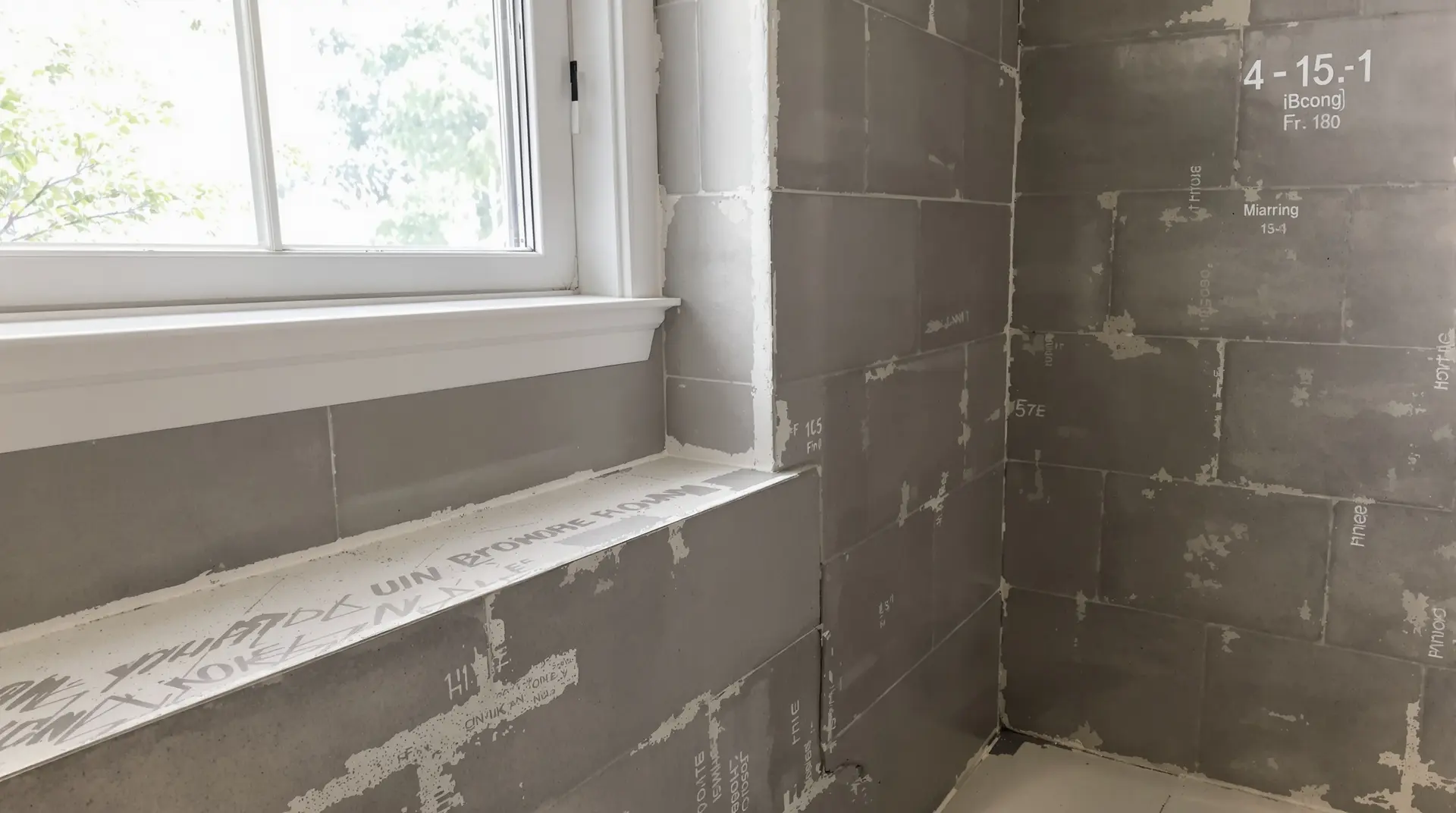
How a bathroom remodel actually unfolds in Babylon, NY: layout decisions, tile selection, vent and rough-in sequencing, permit timing, and what slows the schedule.
Quick answer: a bathroom remodel in Babylon, NY is decided more by the order you make selections than by any other single factor. The homeowners who pick layout first, tile second, and fixtures third finish on schedule.
The ones who pick paint colors before they’ve signed off on the rough-in plan are the ones still unpacking the toilet box at week 9. The bathroom is small. The decisions aren’t.
I get a version of this question almost every week from homeowners in Babylon and the rest of Nassau County. The bathroom looks tired, the tile is dated, the vanity is split at the top, and the family is ready.
They want to know how to start without losing six weeks to indecision. Here’s what a Babylon bathroom remodel actually looks like in 2026, and the decisions that drive the schedule from rough-in to ribbon-cut.
What you’re actually deciding in a Long Island bathroom remodel
A bathroom is small. Three hundred square feet at most. So why does it feel so heavy? Because every trade in residential construction visits a bathroom. Demo crew, plumber, electrician, tile setter, drywall, painter, and usually a glass installer at the end. Each one has to be sequenced. Skip a step and the next trade waits.
Materials are the part homeowners obsess over. They shouldn’t, at least not first.
The decisions that move the schedule are layout (does the toilet move, does the shower wall shift), water lines (do you reroute supply or drain), and ventilation (does the bath fan vent through soffit, gable, or roof). Pick those three, and the rest of the project organizes itself behind them.
Bathroom types and what each one demands
Different bathrooms need different conversations. Powder rooms are mostly cosmetic, so the tile, the vanity, and the lighting carry the room. Hall baths are the workhorses.
The tub-to-shower swap is the most common scope, and it’s the one where vent fan rerouting almost always becomes a separate week in the schedule. Primary baths are where layout decisions actually matter, because moving a vanity wall opens up a different drainage plan.
| Bathroom type | Square footage | Decision-driver | Typical scope |
|---|---|---|---|
| Powder room refresh | 20-35 sq ft | Tile and lighting selection | New vanity, toilet, floor tile, paint, light |
| Powder room rebuild | 20-35 sq ft | Vent fan routing, plumbing rough | Walls opened, new plumbing, custom tile, vent fan |
| Hall bath refresh | 40-60 sq ft | Tub-to-shower decision, valve rough-in | Tub-shower combo replaced, new vanity, tile, fixtures |
| Hall bath full remodel | 40-60 sq ft | Layout shift, exhaust rerun | Walls opened, tile to ceiling, new vent path |
| Primary bath remodel | 75-110 sq ft | Walk-in shower geometry, niche placement | Walk-in shower, double vanity, separate water closet |
| Primary bath gut and addition | 100-150 sq ft | Footprint change, framing | New window, structural work, full-tile envelope |
Where you fall on the table tells you what week of the schedule the hardest decision lands. Powder rooms get hard at week 1 (tile selection). Hall baths get hard at week 2 (rough-in inspection). Primary baths get hard at week 3 (cabinetry layout). Plan for it.
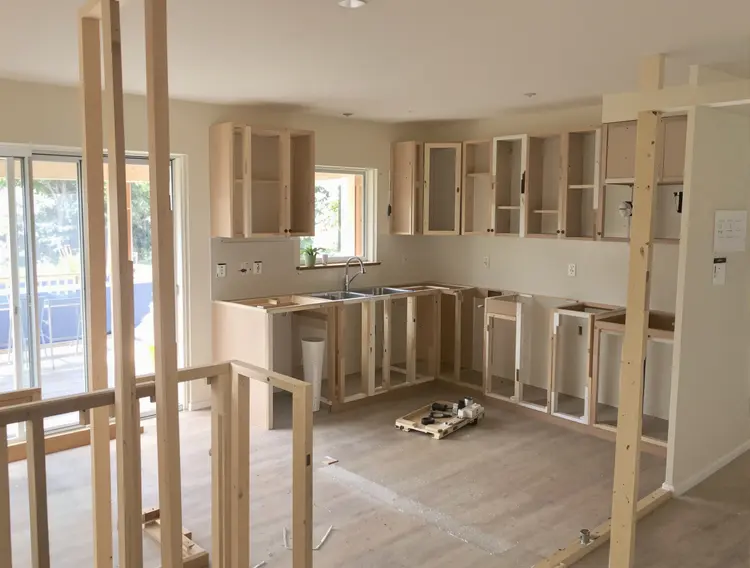
How tile selection drives the rest of the schedule
Tile is the single biggest decision in a bathroom, and it lands in the middle of the schedule whether you’re ready or not.
The wrong tile can stall a job for two weeks because the supplier short-shipped, because the lot you ordered turned out to be off-batch, or because the size you picked doesn’t lay out cleanly against the new shower curb. None of that is anyone’s fault. All of it is predictable if you know to ask.
Pick tile first, before fixtures, before paint, before vanity. Order the actual lot you’ll install, not just a sample. Confirm the supplier has every box in stock and that the second box is the same dye lot.
Tile setters in Nassau County will tell you the same thing. The job that runs smoothly is the one where the tile is on a pallet in the garage by the day demo starts.
Upgrades that earn their place in a Long Island bathroom
Some upgrades genuinely make the room better. After 22 years on Babylon-area jobs, the ones that consistently land well are the unsexy ones. A frameless glass shower opens up a small hall bath visually and makes a 40 sq ft room feel like 60.
Heated floor mats under tile run as a single weekend install during the rough-in phase, and on a Long Island January morning they earn their keep. Schluter trim on the tile edges hides cuts that would otherwise look amateur and lasts the life of the room.
On the other side, smart toilets break in eight years and the warranty rarely covers them. Backlit mirrors look pretty in showroom light and pull a circuit you’d rather use for the vent fan.
Heated towel bars get used twice a year and require their own dedicated wiring. Pick the upgrades that integrate with the framing, the mechanicals, or the plumbing, not the ones that bolt onto a finished wall and call themselves luxury.
How permits and Babylon-area inspections shape the schedule
In the Town of Babylon, any plumbing or electrical work in a bathroom triggers a permit. The application takes a week to be reviewed. Inspections happen at rough-in (before walls close) and final (before you move back in).
Each one is a half-day where the trades sit and wait, and on a tight schedule that half-day can become a full week if the inspector is booked.
Skipping a permit to compress the schedule sounds appealing the day demo starts. It looks different the day you sell the house. Appraisers pull permit history, and unpermitted bathroom work can either kill a deal or drop the appraised value sharply.
The honest answer is to file the permit on day one of the project. Selective Remodeling carries Suffolk License HI-69024 and Nassau License 198901, and the paperwork side of the project is part of the schedule the homeowner never sees but always benefits from.
When to do a full remodel and when a refresh is enough
If your layout works, your floor is solid, and your fixtures are post-2000, a refresh probably gets you 80% of what a full remodel does. New paint, new vanity, new toilet, new mirror, new floor tile, regrout.
It’s not glamorous. It works. The catch: the second your tile setter pulls up the floor and finds rotted subfloor or mold around the toilet flange, the scope expands. Build in a contingency week or don’t start.
Full remodels make sense when the layout fights you, the plumbing is original to the house (most pre-1970 Babylon homes are), or moisture problems are already showing through the ceiling below. At that point, refreshing is throwing good work after bad. Get a contractor to open one wall and tell you what you’re working with before you commit either way.
Lifestyle fit: how the room will actually be used
The best Babylon-area bathroom remodels start with a question nobody asks early enough: how does the family actually use this room? A hall bath shared by two teenagers needs durable surfaces, separate vanity zones, and a vent fan strong enough to clear two morning showers.
A primary bath in an empty-nest household can lean into a soaker tub or a freestanding shower without compromising daily flow. The same square footage, two completely different rooms, because the lifestyle drives the layout.
Planning a bathroom remodel in West Babylon? Explore our bathroom remodeling services in West Babylon and discuss how the layout, fixtures and storage should work for your household before demolition begins.
If you’re trying to figure out whether your bathroom needs a refresh or a full rebuild, send a few photos and the floor plan. We’ll tell you, plain English, which decisions to make first and which ones can wait.
You can also browse our bathroom remodeling work and pricing examples to see how the same room can be solved three different ways depending on the family inside it.
After 1,000-plus projects across Nassau and Suffolk, the rule that holds across every job is the same. Decide layout first, tile second, fixtures third. Sequence the trades the way the inspectors expect to see them.
Pick the upgrades that integrate with the framing. Skip the ones that bolt on. The bathroom is small, the decisions aren’t, and the schedule rewards the homeowner who treats the early decisions as the real work.