
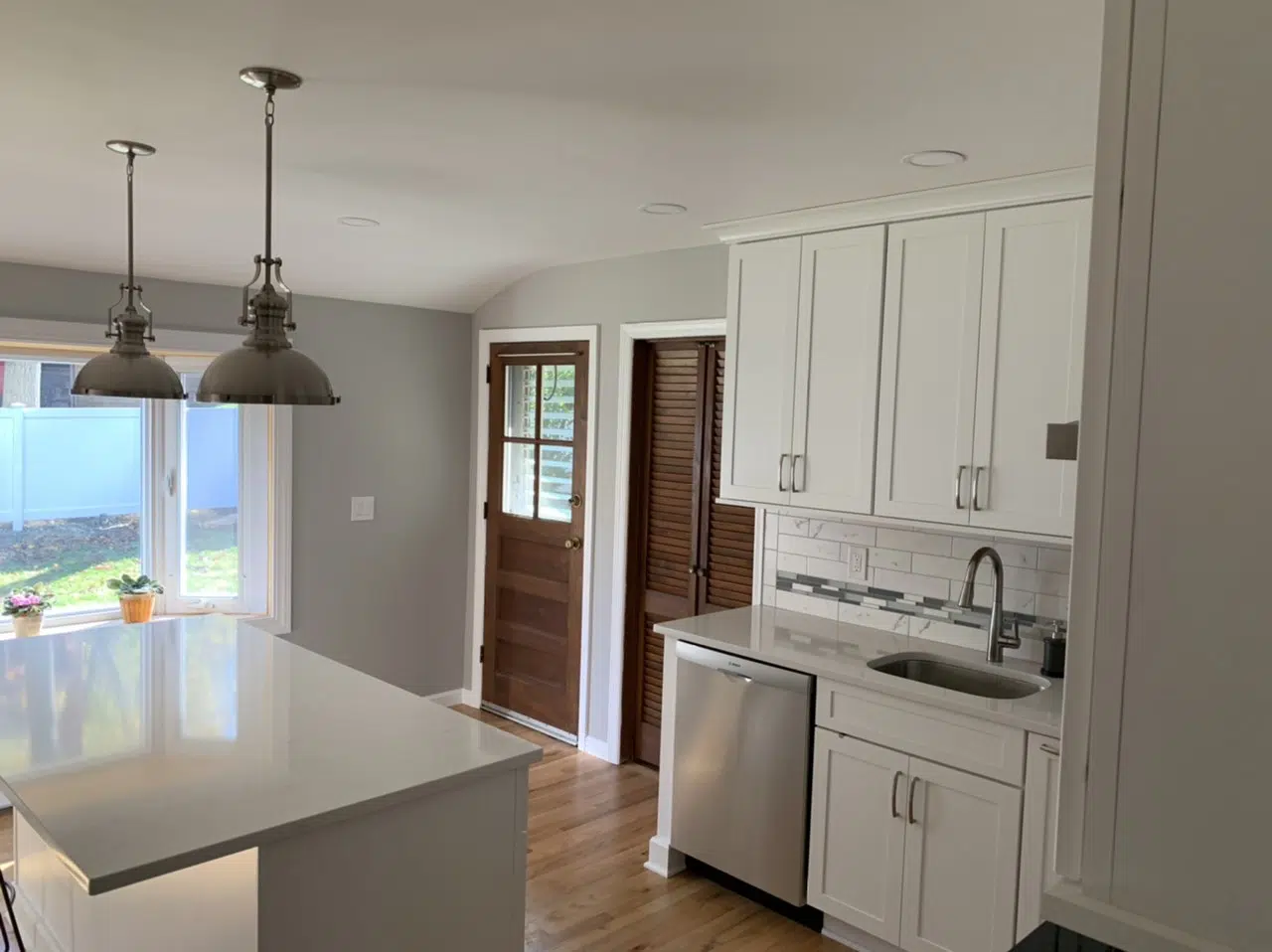
The backsplash is usually the last thing people pick in a kitchen and the first thing anybody notices when they walk in. It is a small enough piece of the budget that homeowners assume it is an easy call, and then they stand in a tile store for two hours holding four samples that all look fine.
This is the order I walk clients through. Start with what is already decided in the room, then work down to the tile. The list of options gets a lot shorter once you do it in that order.
The quick version: pick the counter and the cabinets first, decide how high the tile goes before the counter is templated, choose a material you are actually willing to clean, treat grout color as a real decision, and settle where the tile stops before anybody starts cutting.
Start With the Counter and the Cabinets

The backsplash has to live between two surfaces that are already chosen, so those two get to go first. If the counter has a lot of movement in it, heavy veining or a busy granite, the tile needs to be quiet or the wall and the counter fight each other. If the counter is calm, the tile can carry the room and you have more freedom.
Cabinet color sets the temperature. Warm white cabinets next to a cool gray tile look off in person even when they looked fine on a screen, because the undertones do not match. Hold the tile against a cabinet door before you decide anything, not against a paint chip.
If none of it is picked yet, work in that order: kitchen cabinets first, because they have the longest lead time and they are the biggest visual mass in the room. Then kitchen countertops, because the slab you fall in love with will narrow the tile list for you. The backsplash comes last and it should.
Decide How High the Tile Goes

The standard is counter up to the bottom of the wall cabinets, which is usually about 18 inches. That is what most kitchens get and there is nothing wrong with it. The other options are worth knowing about because two of them have to be decided early.
Full height behind the range only is a common upgrade. The tile runs from the counter to the hood or the ceiling on that one wall and stays at 18 inches everywhere else. It puts the money where people look and it does not double the tile budget. Full height everywhere costs more in both material and labor and it can be a lot of pattern in a small kitchen.
Then there is a slab backsplash, where the same stone or quartz as the counter runs up the wall. This is the one that has to be decided before the counter is templated, because the fabricator is cutting it from your slab and pricing it with the counter. Bring it up at the countertop appointment or the option is gone. It is the easiest surface in the kitchen to clean, since there is almost no grout on it.
Pick a Material You Are Willing to Clean

Every material on this list looks good on day one. The difference shows up two years in, behind the range, after somebody makes sauce.
| Material | How it cleans | What to watch for | Price position |
|---|---|---|---|
| Ceramic or porcelain subway | Wipes down with anything | Very little, which is why it stays popular | Lowest |
| Glass tile or glass mosaic | Wipes clean, shows streaks and fingerprints | Needs a good setter, and the mesh backing can show through light glass | Middle |
| Marble or limestone | Needs sealing and it stains from oil, wine, and lemon | Behind a range it will change over time whether you seal it or not | Middle to high |
| Quartz or stone slab | One surface, almost no grout, easiest of the group | Priced and ordered with the counter, so it has to be decided early | Highest |
| Small mosaic, penny or hex or herringbone | A lot of grout lines to keep clean | Grease behind a cooktop settles into the joints | Middle on material, high on labor |
My honest opinion after a lot of kitchens: if you cook every night and you want marble behind the range, buy it knowing it will patina. Some people love that and some people call me a year later. Porcelain that looks like marble has gotten good enough that you should at least put the two next to each other before you commit.
Grout Color Does More Than You Think

The same white subway tile with white grout, gray grout, and charcoal grout is three completely different backsplashes. Matching the grout to the tile makes the wall read as one quiet surface. Contrasting it puts the pattern on display and turns a plain tile into a feature. Neither is wrong, and people rarely realize it is a choice until I show them.
White grout behind a range will not stay white. It can be cleaned and it can be sealed, and it still ends up a shade or two off within a couple of years. If that is going to bother you, pick a light gray instead of a bright white and you will never notice the change.
Epoxy grout resists staining much better than standard cement grout and it costs more to buy and more to install, because it sets fast and it is harder to work with. I recommend it behind the range and around the sink. Spending it on the whole kitchen is usually more than the job needs.
Ask your tiler to set a few loose tiles on a board and grout them in the color you are considering. It takes them ten minutes and it settles the argument.
Plan the Outlets, the Edges, and Where the Tile Stops

These are the details that hold a tiler up for a day when nobody decided them in advance. Every one of them takes about twenty minutes to settle.
- Whether the outlets sit horizontal or vertical, since a horizontal outlet lands in fewer grout lines and looks tidier in a tight run
- Whether the outlets can move up under the wall cabinets or into the cabinet bottom, which gets them off the tile completely
- What color the outlet covers are, because a white cover on a dark tile is the first thing your eye finds
- Where the tile ends on an open wall: at the cabinet edge, at the end of the counter, or with a trim piece that closes it off
- What happens at the window over the sink, whether the tile stops at the casing or returns into the opening
- Whether under-cabinet lighting is going in, since the wiring channel gets buried behind the tile and has to be run first
- Whether the tile continues behind the range hood or stops at the bottom of it
- The edge treatment where the tile stops: bullnose tile, a metal trim strip, or a mitered edge
Under-cabinet lighting is the one that catches people. It is an easy add while the wall is open and an expensive one after the tile is set, so decide it now even if you install the fixtures later.
Bring the Counter Sample and Look at It in Person

Screens lie about color. Tile photographed under studio lights in a catalog and the same tile under a warm bulb in your kitchen are not going to look like the same product. Neither will the tile flat on a table compared to the tile standing up on a wall, because it catches light differently at that angle.
So bring the actual pieces. A counter offcut from your fabricator, one cabinet door, and the tile you are considering, all held together, standing up, under a light close to what your kitchen has. That is a fifteen minute visit and it saves two trips back to the tile store. It is also most of the reason we keep a showroom.
We do a lot of kitchens on the kitchen remodeling east massapequa side of the county, and the ones that go smoothest are the ones where the tile got picked with the counter sample in hand. It works the same way up on the north shore. The kitchen remodelers oyster bay clients who wait until the counters are templated end up with a shorter list of tiles and a much easier decision.
Come See It Before You Order
A backsplash is a small line on a kitchen estimate and it is the surface you look at every morning, so it is worth an hour of somebody’s time. If you already have counters and cabinets picked, bring the samples and we will narrow it down with you. If you have not started, we will do it in the right order so you are not undoing a decision later.
Reach out through our contact form and tell us where you are in the process. Every project we quote is priced down to the nail with no hidden fees, and once work starts you get a portal with daily logs and a live schedule, so you always know what is happening in your kitchen that day.